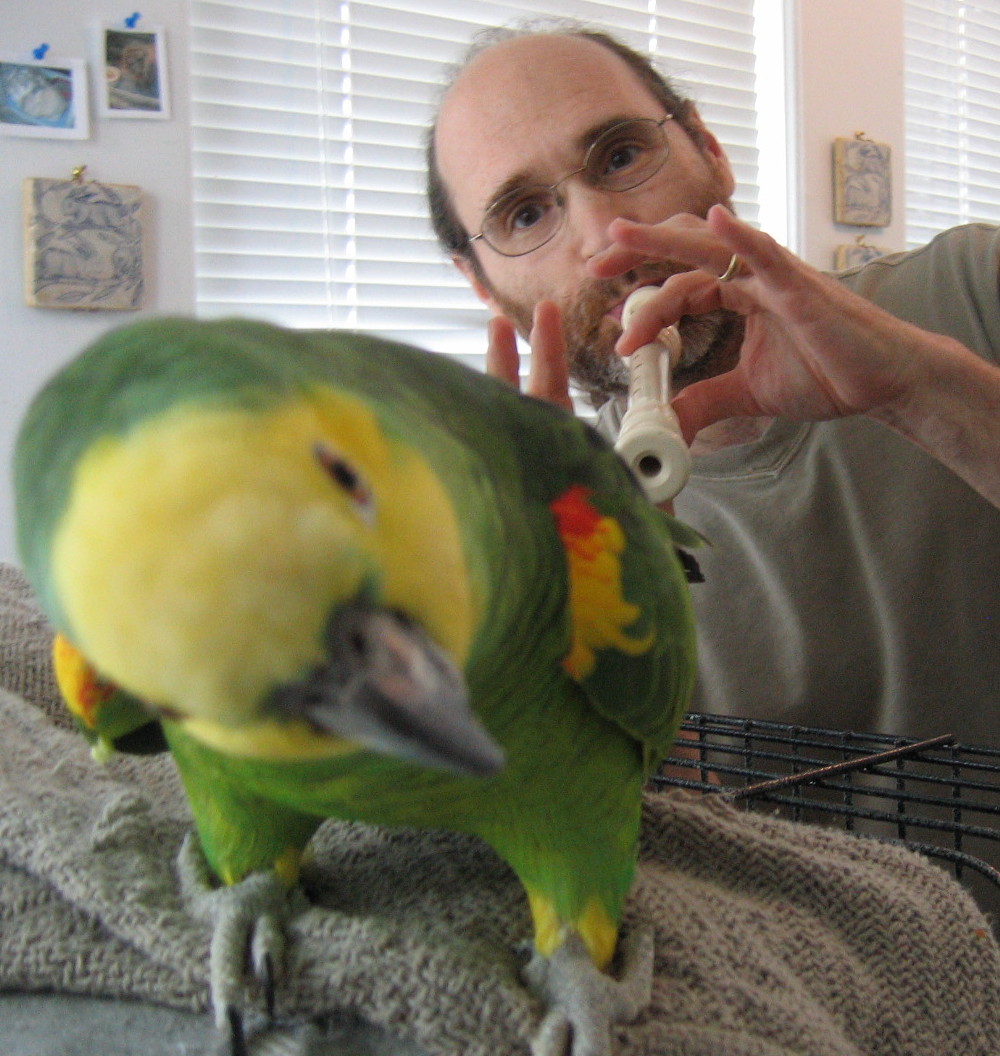
more on habit
Depending on the natural inclination and passion of the student, keeping what's naturally expressive is important in the midst of working on improving technique. A habit can seem 'natural' when in reality it is a reflex or a reaction to a set of certain physical-psychological balances. Then during the repetition of the action, can turn into a 'hardened' habit which sometimes people call their 'second' nature.
A fall back situation, (habitual- comfort- zone) are often seen and felt as 'second' nature. A natural inclination towards needing and/or wanting to express oneself, (on an instrument and in other areas of life probably as well), most often will not get lost while working on refining and developing more technical control. BUT, if the student has a teacher that has an extremely tight and narrow idea of how an instrument or piece 'should' be played, it can interfere with the natural talent and become very destructive to the student who needs to express themselves personally in their music making.
This is why, in my view, working on technique needs to have at least the prime element of music involved which is movement. Not just metronomic mono rhythm, but fluid directional movement. Then the expressive player can channel the energy into that movement and find it's musical substance even if the 'spirit' of the exercise is on the drier side. It can still have grace, momentum, vibrancy and other qualities. That is why I often think of being an actor that has many modes of behavior when I play. When doing that, my playing always is energized whether it is an Arban's study, a dry staccato Stravinsky note, an excerpt or a prayer. It's all in the connection.
Monday, February 20, 2012

Monday, February 13, 2012
TEACHER'S LOG, SCHOOL DATE 2-13-12
To change or even slightly alter deep ingrained habits, takes real determination and constant vigilance. It is a whole process and can be expedited by having a notebook of what you want to change written down in it and then remembering to look at it before each practice session. This will help. The important thing to realize is that what we do automatically has become unconscious or semi-conscious. With each action there is a certain speed that is going on. If we alter our speeds, usually be slowing down and deliberately thinking about what we are doing and what we want to accomplish, can help assist in retraining our systems towards our desired goal.
This takes time and should not be rushed. If it is approached daily, with thoughtfulness and care, it will change quicker than trying to force it at a faster speed than it wants to go. Being consistent and regular with our efforts is the key.
A great mentor of mine used to say, "Go slow to go fast." It is true. If we do not, we will eventually have to spend time undoing the new not so great habits we developed trying to improve the old ones we were trying to change.
A habit has attached to it a physical, a mental, and many times an emotional component. That is why taking our time in changing old ways is so important. There is never just one thing. One thing is always attached to other things. With attentive practice, one will start to see much. It is well worth the investment of time accompanied by a supportive attitude to change habits that block our desired goal.
This takes time and should not be rushed. If it is approached daily, with thoughtfulness and care, it will change quicker than trying to force it at a faster speed than it wants to go. Being consistent and regular with our efforts is the key.
A great mentor of mine used to say, "Go slow to go fast." It is true. If we do not, we will eventually have to spend time undoing the new not so great habits we developed trying to improve the old ones we were trying to change.
A habit has attached to it a physical, a mental, and many times an emotional component. That is why taking our time in changing old ways is so important. There is never just one thing. One thing is always attached to other things. With attentive practice, one will start to see much. It is well worth the investment of time accompanied by a supportive attitude to change habits that block our desired goal.
Sunday, February 5, 2012
TEACHER'S LOG, SCHOOL DATE 2-5-12
Looking at What is Control
some thoughts
When someone is 'out of control,' what are the characteristics emotionally, mentally, verbally, physically? If someone is drunk or impaired in some way behind the wheel of a car, that person presents a danger and a hazard to others being on the road driving. They weave in and out of their lane, speed up or slow down at odd and strange times, don't obey the traffic signals and on and on.
So if someone is out of control in their playing, what does that mean? Are they a danger or a threat to other musicians in the ensemble? Do they not 'obey' the musically notations and do random things and act in their own timings regardless of what it says on the page? Do they not have the ability to hold notes steady and place their articulations evenly? Are they limited in their dynamic contrasts? If these are signs of being out of control, what are the causes?
Perhaps a very important question to ask is "What is controlling the person?"
There is an interesting relationship between concentrate, center and control. If someone is not in a stable place in themselves, or they can't find their 'center,' control can be challenging. If a person is unable to concentrate, (act on center), then loosing ones place in the music and other things can start to go awry.
Control is being able to do what we need to do, in the way we want to do it, when we want to do it (or have to do it in the way someone else wants us to do it).
Control is having the ability to do something effectively.
Control has a spectrum of skill or lack there of.
Control is a harmonious relationship between our mind and body where they both work in synchrony with each other. (Coordination is an important ingredient in having control).
Control is being able to stop or go when we want or need to.
Control is in the transitions.
Control is not a small little tight box with hardly any room to breathe.
Control is not limited to certain dynamic contrasts or tone colors.
Control is having flexibility to change and move beyond our comfort zones when needed.
Control is conscious will in our actions that can be used in the attainment of our pursuits.
Having control is being be able to function with quality and to perform actions in accordance to what is called for in any given situation.
Study the relationship between skill and control. Can you have skill without control? Don't think so!
Think of many situations that call for control. To control our temper. To control our eating and drinking. To be in control of a situation.
To NOT control our friends or colleagues.
Control is having command over voluntary and involuntary systems. (Having control over our bladder is a good example)
If having control becomes a prison, then where does freedom come into it? Having freedom to be able to do, is this control?
If control becomes a musical concept and school of playing, is it attuned to the essence of the music? The finest control is to be open to the essence of the music beyond our biases and then have the assembly, musically and technically, to deliver it. This is where training physically, mentally and emotionally are important. All three are important because just having physical expertise will not bring the music to life. A person typing someone else's poetry does not make them a poet.
some thoughts
When someone is 'out of control,' what are the characteristics emotionally, mentally, verbally, physically? If someone is drunk or impaired in some way behind the wheel of a car, that person presents a danger and a hazard to others being on the road driving. They weave in and out of their lane, speed up or slow down at odd and strange times, don't obey the traffic signals and on and on.
So if someone is out of control in their playing, what does that mean? Are they a danger or a threat to other musicians in the ensemble? Do they not 'obey' the musically notations and do random things and act in their own timings regardless of what it says on the page? Do they not have the ability to hold notes steady and place their articulations evenly? Are they limited in their dynamic contrasts? If these are signs of being out of control, what are the causes?
Perhaps a very important question to ask is "What is controlling the person?"
There is an interesting relationship between concentrate, center and control. If someone is not in a stable place in themselves, or they can't find their 'center,' control can be challenging. If a person is unable to concentrate, (act on center), then loosing ones place in the music and other things can start to go awry.
Control is being able to do what we need to do, in the way we want to do it, when we want to do it (or have to do it in the way someone else wants us to do it).
Control is having the ability to do something effectively.
Control has a spectrum of skill or lack there of.
Control is a harmonious relationship between our mind and body where they both work in synchrony with each other. (Coordination is an important ingredient in having control).
Control is being able to stop or go when we want or need to.
Control is in the transitions.
Control is not a small little tight box with hardly any room to breathe.
Control is not limited to certain dynamic contrasts or tone colors.
Control is having flexibility to change and move beyond our comfort zones when needed.
Control is conscious will in our actions that can be used in the attainment of our pursuits.
Having control is being be able to function with quality and to perform actions in accordance to what is called for in any given situation.
Study the relationship between skill and control. Can you have skill without control? Don't think so!
Think of many situations that call for control. To control our temper. To control our eating and drinking. To be in control of a situation.
To NOT control our friends or colleagues.
Control is having command over voluntary and involuntary systems. (Having control over our bladder is a good example)
If having control becomes a prison, then where does freedom come into it? Having freedom to be able to do, is this control?
If control becomes a musical concept and school of playing, is it attuned to the essence of the music? The finest control is to be open to the essence of the music beyond our biases and then have the assembly, musically and technically, to deliver it. This is where training physically, mentally and emotionally are important. All three are important because just having physical expertise will not bring the music to life. A person typing someone else's poetry does not make them a poet.
Saturday, January 21, 2012
TEACHER'S LOG, SCHOOL DATE 1-21-12
Expansion of sound exercise
1. Play a comfortable note.
2. Feel the note resonate in your feet.
3. Then continue that feeling all the way up to the top of your head.
4. Feel your whole body resonate with that note.
5. Then expand that feeling of resonance all around you as if that resonance IS your body.
6. Keep going a bit at a time, expanding inch by inch with your 'sonic body' expanding until it fills the whole room you are in. Until the whole room IS your 'sonic body.'
7. This can continue until it goes outside of the room. But the room is a good place to start!
Try it on different notes, just for 5 or so minutes a day.
Then start using it on solos or certain excerpts.
** Make sure to really fill ALL PARTS of your body with the sound. From the back of your head, to your armpits and all the way to the soles of your feet. Even your hands and in between your fingers. (Knee caps too!). It will open up all sorts of things about resonance, your body, air and more!
1. Play a comfortable note.
2. Feel the note resonate in your feet.
3. Then continue that feeling all the way up to the top of your head.
4. Feel your whole body resonate with that note.
5. Then expand that feeling of resonance all around you as if that resonance IS your body.
6. Keep going a bit at a time, expanding inch by inch with your 'sonic body' expanding until it fills the whole room you are in. Until the whole room IS your 'sonic body.'
7. This can continue until it goes outside of the room. But the room is a good place to start!
Try it on different notes, just for 5 or so minutes a day.
Then start using it on solos or certain excerpts.
** Make sure to really fill ALL PARTS of your body with the sound. From the back of your head, to your armpits and all the way to the soles of your feet. Even your hands and in between your fingers. (Knee caps too!). It will open up all sorts of things about resonance, your body, air and more!
Sunday, January 8, 2012
TEACHER'S LOG, SCHOOL DATE 1-8-12
yes and NO
There are many ways that one can hear music or make music. The other day I was talking to the NEC Prep Trombone Choir and brought up how music can be saying yes or no. I had them say yes and no and there was not a lot of difference! This was interesting to me because there can be a huge difference depending on the reason it is being said and the emotional content and context behind it. As everyone has experienced in their own life, there are many ways to express yes and no. Since music can be the vehicle for such a wide range of expression and communication, I personally find it useful, insightful and fun to take something as natural and as seemingly simple as yes and no and listen to music with that mindset.
I told the students about the time I was on a school bus in 8th grade and not feeling very well at all! The bus was angled down a hill and was also coming to a very slow stop with a lot of jerks. I thought I was really going to loose my cookies in front of all my classmates which really upped the anxiety! Then suddenly, I started to think of the opening of Beethoven's 5th Symphony. Da da da daaaaa! Da da da daaaaaaaa! I got so absorbed in it that I lost touch with my nauseated stomach and kept singing that first movement. By the time the school bus got to school I felt great! No lost cookies! That really started to confirm to me how powerful music can be to change a physical and mental state. From that point on, I always refer to that first movement of the Beethoven's 5th, the NO Symphony. NO NO NO NOOOOOOO! That first movement can also strengthen will power. It certainly did mine!
So, why not try an experiment and listen to music and feel the 'yes and no' and where plus how it transitions to the other. You will learn a lot about phrasing and what the music might be saying that you never heard before. I wonder who wrote some maybe symphonies????
There are many ways that one can hear music or make music. The other day I was talking to the NEC Prep Trombone Choir and brought up how music can be saying yes or no. I had them say yes and no and there was not a lot of difference! This was interesting to me because there can be a huge difference depending on the reason it is being said and the emotional content and context behind it. As everyone has experienced in their own life, there are many ways to express yes and no. Since music can be the vehicle for such a wide range of expression and communication, I personally find it useful, insightful and fun to take something as natural and as seemingly simple as yes and no and listen to music with that mindset.
I told the students about the time I was on a school bus in 8th grade and not feeling very well at all! The bus was angled down a hill and was also coming to a very slow stop with a lot of jerks. I thought I was really going to loose my cookies in front of all my classmates which really upped the anxiety! Then suddenly, I started to think of the opening of Beethoven's 5th Symphony. Da da da daaaaa! Da da da daaaaaaaa! I got so absorbed in it that I lost touch with my nauseated stomach and kept singing that first movement. By the time the school bus got to school I felt great! No lost cookies! That really started to confirm to me how powerful music can be to change a physical and mental state. From that point on, I always refer to that first movement of the Beethoven's 5th, the NO Symphony. NO NO NO NOOOOOOO! That first movement can also strengthen will power. It certainly did mine!
So, why not try an experiment and listen to music and feel the 'yes and no' and where plus how it transitions to the other. You will learn a lot about phrasing and what the music might be saying that you never heard before. I wonder who wrote some maybe symphonies????
Thursday, January 5, 2012
Happy New Year
Happy New Year to all who read my blog.
A year is new for sure. It is an orbit around the sun. Each day is new. Since I started this post we have moved hundreds of miles in space. In fact the whole galaxy has moved. Many new cells have been born and many have died. Life is always moving. In light of that Truth, isn't it amazing how we can get mentally and emotionally stuck? So the New Year is as new to us as we are new to each moment.
I try to accept each day as new and unique. I put this into my playing even though my warm up is basically the 'same.' It might be the same but it is different each day. Bringing our mind and feelings into a slightly different angle each day can help and refresh our perceptions and have more appreciation for our opportunities that we are constantly surrounded by if only we could see them.
Try this: Take one aspect of your playing, and just feel it and observe it. Not overly think it, just feel and observe it. Get really into it. Take a few notes on what you are noticing and feeling. Even be aware of your mental judgement. Write it all down. Then read it a bit later. See how you feel and think after you read it later and write that down. You will discover lots..
Happy New Moment!
A year is new for sure. It is an orbit around the sun. Each day is new. Since I started this post we have moved hundreds of miles in space. In fact the whole galaxy has moved. Many new cells have been born and many have died. Life is always moving. In light of that Truth, isn't it amazing how we can get mentally and emotionally stuck? So the New Year is as new to us as we are new to each moment.
I try to accept each day as new and unique. I put this into my playing even though my warm up is basically the 'same.' It might be the same but it is different each day. Bringing our mind and feelings into a slightly different angle each day can help and refresh our perceptions and have more appreciation for our opportunities that we are constantly surrounded by if only we could see them.
Try this: Take one aspect of your playing, and just feel it and observe it. Not overly think it, just feel and observe it. Get really into it. Take a few notes on what you are noticing and feeling. Even be aware of your mental judgement. Write it all down. Then read it a bit later. See how you feel and think after you read it later and write that down. You will discover lots..
Happy New Moment!
Friday, December 30, 2011
TEACHER'S LOG, SCHOOL DATE 12-30-11
I thought this might be a good way to end the Teacher's Log for this semester and the last post on the blog for 2011. It was a poem I sent to all my students at the end of the semester who are in my studio at New England Conservatory, New England Conservatory Prep Division, The Boston Conservatory and Longy School of Music. I hope there is something in it for everyone. I wish you all a Happy, Healthy and Meaningful New Year!
Dear Students,
As the semester comes to a close,
realize that there is a chance to recompose
In the midst of your holiday cheer
I hope you find time to strengthen your possible careers
By practicing those things you know you ought
To enjoy the wonderful opportunity you've got
Dig into your Art
It's there for you
Waiting for the moment you say "I do"
It is a marriage of you to It and It to you
But it needs your Love, Devotion and Passion too
It cannot do it on It's own
It gave you talent at the get go
But now you need to activate it
otherwise your talent will only be latent
Jump on board and sail full steam ahead
Drop your fear, it's all in your head!
I know you can if you really want It
It needs you.. a lot.. more than you know..
It's not about a job as the first important thing
It's you providing It with a way to be free
You are important, never doubt that
I'm on your side, always hoping for your best!
My very best wishes to you all!
Mr. Bolter
Mr. B
Norman
but NEVER Norm :-)
Dear Students,
As the semester comes to a close,
realize that there is a chance to recompose
In the midst of your holiday cheer
I hope you find time to strengthen your possible careers
By practicing those things you know you ought
To enjoy the wonderful opportunity you've got
Dig into your Art
It's there for you
Waiting for the moment you say "I do"
It is a marriage of you to It and It to you
But it needs your Love, Devotion and Passion too
It cannot do it on It's own
It gave you talent at the get go
But now you need to activate it
otherwise your talent will only be latent
Jump on board and sail full steam ahead
Drop your fear, it's all in your head!
I know you can if you really want It
It needs you.. a lot.. more than you know..
It's not about a job as the first important thing
It's you providing It with a way to be free
You are important, never doubt that
I'm on your side, always hoping for your best!
My very best wishes to you all!
Mr. Bolter
Mr. B
Norman
but NEVER Norm :-)
Subscribe to:
Posts (Atom)