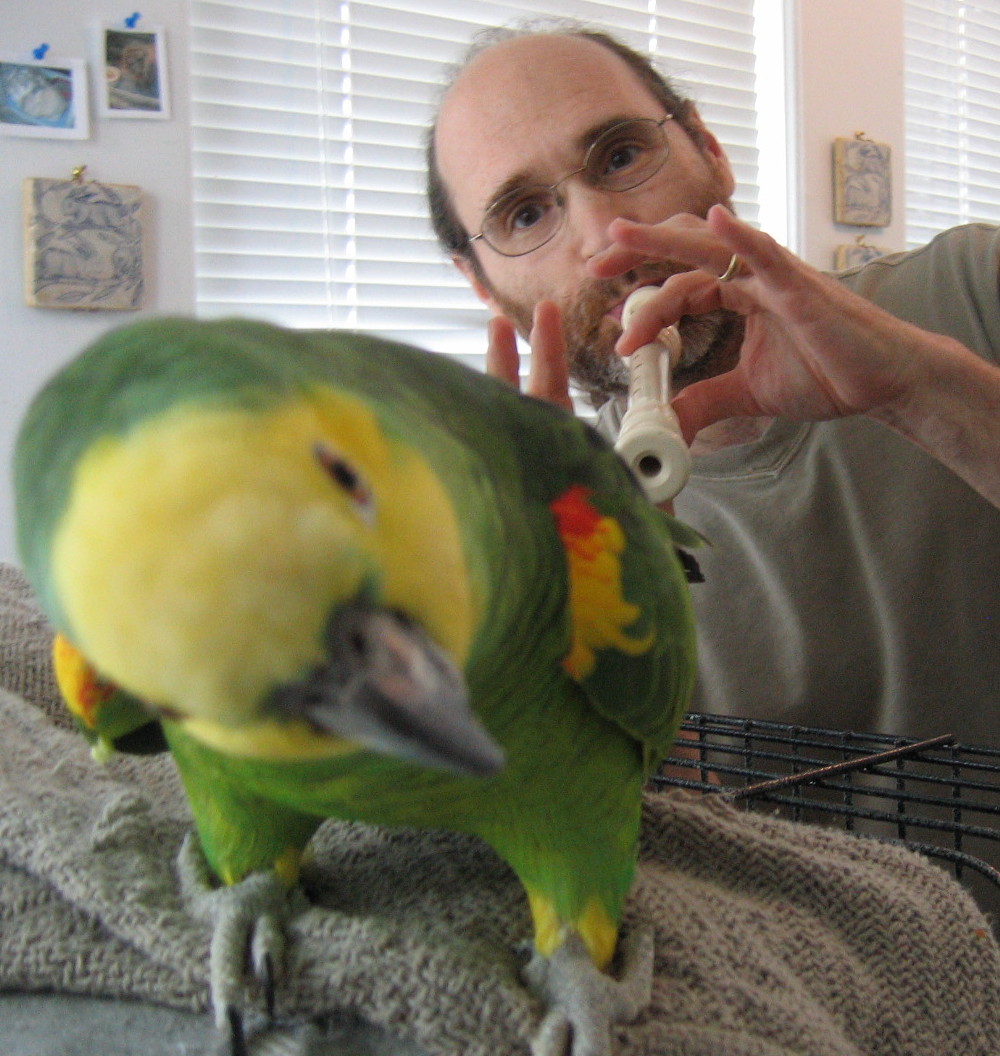
During our physically developing years growth is a very automatic process normally. I remember going to family gatherings and if it had been a year or so since my relatives had seen me last they would say, "Oh my! Have you grown!" But other types of growth are not automatic. The decision or desire to grow as a person or to keep developing as an artist is a choice. It never felt like a choice to me because I was driven to do so, but it still was a choice non the less because I had the option not to keep pursuing it in the way I chose to pursue it.
Here is another video that I think will be a good supplement to my one the other day about self discovery and self expression. No matter what you want to do, you will be confronted with choices and decisions to make. As you recall in my last video, I spoke about the bravery needed to be yourself. This video will elaborate on the previous contemplation.
Saturday, November 14, 2009

Thursday, November 12, 2009
Self Contemplation: Building the Vehicle for Growth and Self Discovery
As many of you have figured out, I think it is important to think and contemplate what you want in life and in your art. Not as an end in it self, but to get clearer in your heart and mind what you are after and why you are doing what you are doing. This might not be important to some people. No problem. But to me and others it is a way of keeping on course as well as deepening and developing ourselves and having our art express that urge and need of continuing growth, which eventually becomes a matter of choice to pursue or not.
Fro those who are interested in expanding themselves, their self discovery and the connection-expression process, I offer this short video.
Fro those who are interested in expanding themselves, their self discovery and the connection-expression process, I offer this short video.
Sunday, October 4, 2009
MORE ON PHRASING vertical and horizontal
To put some more content into this subject of vertical and horizontal aspects of phrasing, I made a couple of videos where I am demonstrating some of the concepts using pieces like Morceau Symphonique and Rochut number 1 and some other melodies you might recognize. It is an intriguing subject, at least for me because it deals with very core laws that govern all of life, at least in some schools of thought. Those magnificent apparent opposites, yin and yang, up and down, valleys and hills, male and female and on and on! Hope these videos help in opening up the territory.
Phrasing 1
Phrasing 2
=
Phrasing 1
Phrasing 2
=
Saturday, September 26, 2009
PHRASING the vertical and horizontal
When you hear the word phrasing, what do you think of? Long lines, where to take a good breath, crescendo- decrescendo and timing, to name a few things that might enter your mind on hearing that word.
To me the structure of the phrasing is determined by the character and spirit of the music. Like anything else, it is easy to play with a method of phrasing that can make our music making sound controlled and well placed. Those are all useful aspects to phrasing. But in the end, if your phrasing has a formula to it that doesn't alter according to the different kinds of music, then that nicely timed, well placed phrasing can sound out of place and not in character with the actual music.
To approach this, let's look at horizontal and vertical. The long linear aspect of the line makes most of us think horizontally, like looking at a horizon. It is broad and covers a lot of space. In music, this long sense of line gives direction, motion and balance to all the up and downs, curves, peaks, valleys and hills in a line. But if we 'flatten' it out too much, we can loose the emotional and character details that create the nuances that identify one kind of phrase from another.
What about a singer? They use words. If you could not hear the diction of the words it would sound muddy and nondescript. As wind players, we think of 'singing' through the horn to help us unify the musical and technical aspects together. But we are not often thinking of the diction and nuances beyond smooth, legato, pretty lines. Certain things a cellist, singer or oboist do in terms of inflections (vertical aspect) are not oftentimes accepted very well by the orchestral trombone community at large, especially with regard to orchestral excerpts.
Listen to people speak. How horizontal is their phrasing in speaking? Listen to instrumentalists. How much vertical nuance is there as compared to the line length (horizontal aspect ) in their phrasing? What about percussionists? Are there different vertical and horizontal phrasing tendencies for different instruments?
What are your tendencies in this area? Listen to others and get a grasp of what is horizontal and vertical in phrasing. Then record yourself and see how balanced your horizontal and vertical aspects are in your phrasing. It is an interesting and rich territory for those who may be interested.
More later...
To me the structure of the phrasing is determined by the character and spirit of the music. Like anything else, it is easy to play with a method of phrasing that can make our music making sound controlled and well placed. Those are all useful aspects to phrasing. But in the end, if your phrasing has a formula to it that doesn't alter according to the different kinds of music, then that nicely timed, well placed phrasing can sound out of place and not in character with the actual music.
To approach this, let's look at horizontal and vertical. The long linear aspect of the line makes most of us think horizontally, like looking at a horizon. It is broad and covers a lot of space. In music, this long sense of line gives direction, motion and balance to all the up and downs, curves, peaks, valleys and hills in a line. But if we 'flatten' it out too much, we can loose the emotional and character details that create the nuances that identify one kind of phrase from another.
What about a singer? They use words. If you could not hear the diction of the words it would sound muddy and nondescript. As wind players, we think of 'singing' through the horn to help us unify the musical and technical aspects together. But we are not often thinking of the diction and nuances beyond smooth, legato, pretty lines. Certain things a cellist, singer or oboist do in terms of inflections (vertical aspect) are not oftentimes accepted very well by the orchestral trombone community at large, especially with regard to orchestral excerpts.
Listen to people speak. How horizontal is their phrasing in speaking? Listen to instrumentalists. How much vertical nuance is there as compared to the line length (horizontal aspect ) in their phrasing? What about percussionists? Are there different vertical and horizontal phrasing tendencies for different instruments?
What are your tendencies in this area? Listen to others and get a grasp of what is horizontal and vertical in phrasing. Then record yourself and see how balanced your horizontal and vertical aspects are in your phrasing. It is an interesting and rich territory for those who may be interested.
More later...
Thursday, September 17, 2009
Another Frequency Band Opportunity
Many of you are aware that the Frequency Band has a Facebook page that Carol set up some time ago where people can become 'fans' of the Frequency Band and follow its activities. One of the activities that happens quarterly is an opportunity for anyone, anywhere to participate in a worldwide Frequency Band OPT, a special synchronized opportunity to join together with others in sending well being and good wishes to others. Carol has made it easy for anyone to participate with simple steps and a video posted to the Frequency Band's Event page. The Facebook link is: Worldwide Frequency Band OPT (Autumn Event)
OPTs are an important part of the Frequency Band and they started in response to Hurricane Katrina in 2005. Since then, we hold OPTs at various times of the year. We have held them in Boston with several musicians and we also have held them in concerts, including our participation at ETW (Eastern Trombone Workshop) this past spring. It is not a local Boston event, it is for all who would like to participate wherever they may be in the world.
So, if you are on Facebook, you can check it out and RSVP if you would like to participate. Again, you can use the above link to Frequency Band OPT Event Page on Facebook and add yourself as "attending." Also you can go to the Air-ev website which is: Air-ev Audio/Video Page if you are not on Facebook and you will see the video as well. Just scroll down the page and you will see "Unity Born of Humanity" video.
Last time we an excellent turnout of over 50 people from around the world who participated and there looks like there will be a good number this time, too! The world can use as much well being as is possible and here is another option and way to help.
Hope to 'see' you there.
I wish all of you well being and all the best!
OPTs are an important part of the Frequency Band and they started in response to Hurricane Katrina in 2005. Since then, we hold OPTs at various times of the year. We have held them in Boston with several musicians and we also have held them in concerts, including our participation at ETW (Eastern Trombone Workshop) this past spring. It is not a local Boston event, it is for all who would like to participate wherever they may be in the world.
So, if you are on Facebook, you can check it out and RSVP if you would like to participate. Again, you can use the above link to Frequency Band OPT Event Page on Facebook and add yourself as "attending." Also you can go to the Air-ev website which is: Air-ev Audio/Video Page if you are not on Facebook and you will see the video as well. Just scroll down the page and you will see "Unity Born of Humanity" video.
Last time we an excellent turnout of over 50 people from around the world who participated and there looks like there will be a good number this time, too! The world can use as much well being as is possible and here is another option and way to help.
Hope to 'see' you there.
I wish all of you well being and all the best!
Sunday, September 13, 2009
Frequency Band and the 9/11 Commemoration in Boston
 The Frequency Band, of which I am co-director with my wife and partner Carol Viera, was very humbled to be asked to play at the Boston 9/11 Commemoration Service held at the State House. What was extra touching for us was the fact that the 9/11 families wanted us back. To me, that says everything. It is a very deep feeling of humanity and service to think we can be a support to their lives in some way through the music.
 We started by playing on the lawn in front of the State House for about 15 minutes before the Lt. Governor officially began the ceremony. The pieces we played were: "Onward" from "On With the Battle of Life," "In All Hearts," "Acceptance and Hope" from "On With the Battle of Life," and a new piece I wrote especially for the 9/11 families called "My Love for Thee Will Always Be."
Then the Lt. Governor spoke, after which was the flag raising and lowering to half mast, Taps, the official moment of silence. We were entrusted with breaking the moment of silence, at which point we played "A Prayer for the Dying." Then, there was the reading of the names of the victims read by family members. That is very moving and stirs the emotions in a real and raw way. They were just not names on a page. They were somebody's brother, sister, husband, son, daughter, wife, cousin or in-law.
We played two pieces at the end, while the people were leaving. They were "Unity Born of Humanity" and the ending from "Katrina Contemplation and Wish." All of these pieces, except for "Onward" and "Acceptance and Hope" (which were recorded in 1998 on our "Experiments in Music" CD) were recorded this past January on the CD entitled "Phoenix." I mention this in case people are interested in hearing what music was picked for this solemn and reverent event.
This was not a concert. We believe not all pieces are meant to played at a concert. The pieces we played on this occasion we also have performed in a concert setting (except for "My Love for Thee Will Always Be") but we always prepare the audience in a way that makes them listen beyond "concert ears" or other kinds of judgement, as best as we can. We picked these pieces for this circumstance and the families were very content with our choice and presentation in this very delicate solemn circumstance.
Our hearts go out to the families and we are very touched and filled with thanks that they included us in this so very personal part of their lives.
Saturday, September 12, 2009
Legato and Lyrical
Oftentimes, we equate legato playing with being lyrical or lyrical playing as being legato. It brings up two interesting questions: What is legato? and What is lyrical? Looking at them separately, we can see their differences and their relationship.
Legato is a form of articulation which connects one note to another note as smoothly as possible. Many times I hear trombonists and their legato sounds like a very smooth tenuto. My legato can sound to glissy for some. My feeling is that the music should dictate what kind is used. There is a spectrum of legato just like there is of anything else. The more tenuto style can work very well in early music and playing with other valve instruments like in a brass quintet. The other more liquid form of legato can work beautifully in many solo things of a romantic nature as well as in many big band or jazz type solos.
But what is lyrical? When we see that a song has lyrics in it, we don't think, "Who wrote the legato to this piece?" We see words. Lyrics are words and we associate words in music with vocal productions and singing. Lyrical poetry. Songs can be poems that are sung. Lyrical speaks of a language of emotional content and expression. So what is the language of emotional content in music? It would be inaccurate to say it is legato. Legato is a technical term to describe a form of articulation. It says nothing of emotional content. But could it provide a color and sonic texture that could be supportive to certain types of lyrical natures? Sure.
Now, does something need to be legato to be lyrical? When we think of many songs it is easy to find a number of them sung in a legato manner. But, many are very articulated with a variety of dictions and punctuations that would be far away from what we generally consider to be legato. Think of all the non-legato lyrical aspects of opera to rock and roll and beyond.
The next time you play something that is not marked legato, ask yourself about what you are doing to provide lyrical content to it or if you think the piece calls for some. Making note values longer does not necessarily provide the element or emotional content to make something sound more lyrical. Finding the inner 'poem' of the piece (from your perspective ) is one way to have the music's unwritten but not unfelt lyrics come alive.
Legato is a form of articulation which connects one note to another note as smoothly as possible. Many times I hear trombonists and their legato sounds like a very smooth tenuto. My legato can sound to glissy for some. My feeling is that the music should dictate what kind is used. There is a spectrum of legato just like there is of anything else. The more tenuto style can work very well in early music and playing with other valve instruments like in a brass quintet. The other more liquid form of legato can work beautifully in many solo things of a romantic nature as well as in many big band or jazz type solos.
But what is lyrical? When we see that a song has lyrics in it, we don't think, "Who wrote the legato to this piece?" We see words. Lyrics are words and we associate words in music with vocal productions and singing. Lyrical poetry. Songs can be poems that are sung. Lyrical speaks of a language of emotional content and expression. So what is the language of emotional content in music? It would be inaccurate to say it is legato. Legato is a technical term to describe a form of articulation. It says nothing of emotional content. But could it provide a color and sonic texture that could be supportive to certain types of lyrical natures? Sure.
Now, does something need to be legato to be lyrical? When we think of many songs it is easy to find a number of them sung in a legato manner. But, many are very articulated with a variety of dictions and punctuations that would be far away from what we generally consider to be legato. Think of all the non-legato lyrical aspects of opera to rock and roll and beyond.
The next time you play something that is not marked legato, ask yourself about what you are doing to provide lyrical content to it or if you think the piece calls for some. Making note values longer does not necessarily provide the element or emotional content to make something sound more lyrical. Finding the inner 'poem' of the piece (from your perspective ) is one way to have the music's unwritten but not unfelt lyrics come alive.
Subscribe to:
Posts (Atom)